You missed the 48-hour window for Shifting Currents — but the core system and two full bonuses are still yours. Everything you need to install the mental operating system for gameplay design is right here. The foundation doesn’t expire.
Tired of guessing your way through gameplay design — with no real process, and results that never match the vision?
Stop Guessing. Start Designing. Install the Mental Operating System for Gameplay Design.
The foundational system to turn raw game ideas into deep, intentional gameplay structures, before you write a single line of code.

You open your project file. The same one you’ve been circling for weeks.
You stare at the mess of half-connected systems, placeholder mechanics, and ideas that sounded brilliant at 2 AM but now feel like they belong in three different games.
You know something is wrong. You can feel it.
But you can’t point to it, you can’t name it, and you definitely can’t fix it — because you don’t even know where “it” lives.
So you do what you’ve always done.
You tweak a variable. Move a system around. Add a new mechanic and hope that this one will finally make the whole thing click.
It doesn’t click.
And somewhere in the back of your mind, a quiet voice starts whispering the thing you’ve been trying not to hear:
“Maybe I’m just not cut out for this.”
Let me stop you right there.
That voice is wrong. Dead wrong. And I can prove it — because I know exactly where that feeling comes from, what’s actually causing it, and why it has absolutely nothing to do with your talent, your creativity, or your potential.
But to see it clearly, you need to understand something that almost nobody in this industry is willing to say out loud.
The advice everyone gives you is structurally broken.
“Just make games.”
You’ve heard it a hundred times. From forums. From GDC talks. From developers you admire.
It’s the default answer to every question about how to get better at game design.
And on the surface, it sounds reasonable. Practice makes perfect, right?
So you practiced. You opened the engine. You followed the tutorials. You built systems, prototyped ideas, stacked features on top of features — and you practiced.
And here you are.
Same half-finished projects. Same fog of confusion. Same gut feeling that something fundamental is missing.
The advice wasn’t wrong because practice doesn’t matter.
It was wrong because nobody ever taught you what to practice.
You learned how to make things. How to code a jump. How to implement an inventory. How to use Unity, Unreal, a dialogue tree, a save system. You learned how to build.
But when was the last time anyone taught you how to decide what to build in the first place?
How to take a raw, exciting idea and turn it into a clear structure you can actually execute — with every piece serving a purpose you chose deliberately?
They didn’t.
So you did what felt logical.
You looked at games you love, extracted the features you admired, and started stacking them into your project.
Stamina system. Crafting. Skill tree. Dynamic weather. Inventory with weight limits.
Each one brilliant in the game it came from. Each one, in isolation, a great idea.
And when you put them together in your prototype, something strange happens: the game doesn’t feel like any of those games you admired.
It feels like a Frankenstein.
Parts stitched together that don’t communicate with each other.
Systems that technically function but produce an experience that means nothing.
Your instinct? Add more. Surely the missing piece is a feature you haven’t thought of yet.
It never is.
Because the problem was never what you were putting in.
The problem is that you never had a way to decide why any of it should be there — or how it all connects into something larger than the sum of its parts.
A list of features is a list of ingredients.
Ingredients without a recipe don’t make a meal. They make a mess on the counter.
And when the mess becomes impossible to ignore, the industry has one final piece of advice for you.
“Just find the fun.”
Iterate. Change variables. Let people play it. Ask them if it’s fun.
But what does “fun” actually mean — operationally? What do you do with that word when you sit down to design?
You can’t measure it. You can’t target it. You can’t reverse-engineer it.
You can’t look at a system in your game and determine whether it’s producing “fun” or not, because “fun” isn’t a design parameter. It’s a vague emotional after effect that you can’t control directly.
Telling a gameplay designer to “find the fun” is like telling an architect to “find the cozy.” Not wrong, exactly — just useless.
No direction. No process. No way to make a better decision tomorrow than the one you made yesterday.
And so the cycle repeats.
Build. Tweak. Scrap. Start over. Build again. Rinse and repeat until you either stumble onto something that works by sheer luck — or you burn out and add the project to the graveyard.
That’s not a design process. That’s a slot machine.
And you’ve been pulling the lever for months. Maybe years.
Every one of these problems has the same root cause.
Let me tell you what’s actually happening. Because once you see it, every piece of frustration you’ve ever felt will suddenly make sense.
You don’t have a knowledge problem. You have a process problem.
The feature lists that go nowhere. The prototypes that collapse. The “find the fun” loop. The tutorials that teach everything except the thing you actually need.
They are all symptoms of a single root cause:
There is no structured method for gameplay design.
Not in the tutorials. Not in the GDC talks. Not in the books. Not in the universities.
Nowhere in the entire ecosystem of game design education does anyone hand you a real, repeatable process for taking a raw idea and turning it into an intentional gameplay structure.
They teach you to build. They teach you to implement. They teach you to write code and create assets.
But the actual thinking work of gameplay design — deciding what to build, why to build it, how every piece connects to every other piece to produce a specific experience in the player’s mind — that part is left entirely to trial-and-error.
And then they call it “creative intuition” and pretend it’s supposed to work that way.
It’s not supposed to work that way. It doesn’t work that way. And you are not broken for struggling inside a system that was never designed to produce competent designers.
The game in your head isn’t the problem.
The ideas aren’t the problem.
Your talent isn’t the problem.
The missing piece is an operating system for the work itself — a foundational process that tells you how to think about gameplay design before you build anything.
A way to go from “I have this idea” to “I have a clear, intentional structure I can actually execute” — without guessing, without praying, and without pulling the slot machine lever one more time.
That piece exists now.
And that’s what the rest of this page is about.
But before I show it to you, you need to know where it comes from — and why you should trust the person behind it.
You’re probably wondering… who the hell is this guy telling you all this?
Let me be brutally clear from the start:
I am not some famous game director from a massive AAA studio. You won’t find my name in the credits of a dozen blockbuster titles.
My name is Kaptain Haven. And not too long ago, I WAS YOU!


My background is in software engineering, and driven by that same fire that’s in you, I enrolled in the best game design school in my country, believing it was the one true path to mastery.
And that’s where I ran headfirst into the same wall you’re hitting right now.
I saw the abstract theories. I saw the vague advice. And I saw the frustrating, unbridgeable gap between what was taught and what it actually takes to build a game from scratch.
All around me, I saw brilliant, passionate students get lost in a fog of trial-and-error, their confidence slowly being ground to dust.
It was a feeling I knew all too well from my entire academic life: a system that seemed more interested in protecting its own traditions than in forging real-world competence in its students.
I refused to accept this was the only way.
This refusal sparked a five-year obsession: to deconstruct the “magic” of game design and rebuild it as a real, teachable engineering discipline.
Through a sea of my own failures and relentless deconstruction, I began to forge a new, analytical system.
Armed with an early version of it, I brought it back to my own university, convinced I had found something revolutionary.
The response? A dismissive wave.
I was told I didn’t have the “credentials” or the “academic standing” to challenge their methods. They didn’t critique the system on its merits.
In that moment, I felt a cold, quiet clarity: the “system” wasn’t just broken, it was actively hostile to real innovation.
They preferred the safety of their ivory tower.
And right when I was at that professional low, the world itself seemed to conspire to isolate me further.
The COVID pandemic hit, and I was trapped in another city, cut off from my family by months of brutal lockdown, right when I needed them most.
But that combination of professional rejection and forced physical isolation didn’t break me. It gave me something I’d never had before: total freedom. And the space to build something true.
Freed from the need for their approval, freed from their rules, I spent the rest of those five years forging and battle-testing my own.
And slowly, through thousands of hours of obsessive work, a clear, repeatable pattern began to emerge.
It wasn’t a single flash of insight. It was a dawning realization that beneath the surface of every game — no matter how simple or complex — lies a universal architecture.
A deep, logical framework that, once understood, doesn’t just give you control over your creative process.
It fundamentally changes how you think about, analyze, and build games.
It wasn’t magic. It was a repeatable process. A System.
And now, I’m sharing that system with you.
I built WhaleBrain for the determined, the ambitious — the designers who refuse to accept guesswork as the price of admission to this industry. I’m giving you the map I wish I’d had when I started.
And that map starts with a single, foundational shift in how you think about gameplay design.
The reason gameplay design still has no real method.
If a structured method for gameplay design is really the missing piece — and it is — then you’re probably asking yourself a very reasonable question right now:
“Why doesn’t this exist already? Why hasn’t anyone built it?”
The answer is uncomfortable. And it’s the reason I spent five years obsessing over this instead of just pointing you to something that already existed.
Let’s look at the two paths that seem like they should solve it. And why neither one does.
The traditional route. A degree in Game Design.
Structure, curriculum, credentials, a community of peers — all the things you feel you’re missing right now. Some programs do have genuine value.
But here’s what even the best ones won’t tell you upfront:
Game design programs are generalist by nature.
They teach you a bit of narrative, a bit of level design, a bit of UI, a bit of production, a bit of programming. You leave knowing a little about a lot.
Gameplay design as a specific, deep, standalone discipline? It barely exists in their curriculum.
And the process they teach for the design work itself? It’s the same one that brought you to this page.
Brainstorm. Prototype. Playtest. Iterate. Find the fun.
Trial-and-error with academic polish, a feedback loop, and a price tag that can bury you in debt for a decade.
Four years and tens of thousands of dollars later, you walk out with a generalist degree — and the same missing piece you walked in with.
That’s not a path to mastery. That’s an expensive detour.
What about learning from the veterans?
Skip the university. Go straight to the source.
Learn from designers who’ve shipped real titles at major studios — ex-Blizzard, ex-Riot, ex-Naughty Dog. People who clearly know.
And they do know.
Their experience is real. Their insights are often brilliant. I have genuine respect for many of them.
But there’s a critical distinction between having expertise and being able to transfer it.
Here’s what happens when a veteran teaches you their “principles of great game design”:
They tell you things like “every mechanic should serve the core loop.” Or “great combat needs weight and consequence.”
You nod, because it sounds right. It sounds wise.
Then you sit down to work on your own project and realize: you have no idea how to actually apply any of it.
“Serve the core loop” — but what is your core loop, structurally? How do you identify it?
“Combat needs weight” — but what produces weight at a structural level? What do you actually change in your design to create it?
These principles sound operational. They’re not.
They’re the output of a veteran’s intuition — conclusions they arrived at through thousands of hours of trial-and-error at the highest level.
They can describe what good design looks like. They can’t teach you the underlying structure that makes it good.
It’s the difference between a master chef tasting your dish and saying “it needs more acidity” — and someone teaching you the chemistry of flavor so you can make that diagnosis yourself, on any dish, in any context.
The chef’s palate is real. But you can’t install twenty years of tasting experience into your mouth by listening to his descriptions.
The veteran’s principles work beautifully — for the veteran.
You don’t have the mental model they’re drawing from, and you can’t build it by memorizing their conclusions.
You can only build it by doing what they did — fifteen years of trial-and-error — or by acquiring the structural understanding directly.
Their approach doesn’t scale as a teaching method.
It gives you fish. It doesn’t give you the ability to fish.
systems interact, what makes an element essential vs. decorative.
You don’t have that model yet. And you can’t build it by memorizing their conclusions.
You can only build it by doing what they did — fifteen years of trial-and-error — or by acquiring the structural understanding directly.
So if universities can't teach it and veterans can't transfer it — what's left?
Not more theory. Not more practice. A completely different way of thinking.
Not principles you memorize. Not tips you collect. Not rules handed down by authorities.
A way of seeing.
Here is what five years of obsessive deconstruction revealed:
Beneath the surface of every game — no matter how simple, no matter how complex — lies an invisible architecture.
A network of cause-and-effect relationships that determines everything: what the player can do, what happens when they do it, how each action ripples through the system, and what kind of experience emerges from the whole.
Every game you’ve ever loved is built on this architecture.
Every mechanic that “felt right” was right because of its position in this network — not because of what it was, but because of how it connected to everything else.
The game doesn’t happen on the screen. It happens in the player’s mind. And the player’s experience — their tension, their curiosity, their satisfaction, their frustration — is shaped entirely by this invisible structure of cause and effect.
Dark Souls and Breath of the Wild share stamina, combat, exploration, and equipment.
Yet no one who’s played both would ever confuse the experiences.
Why? Because the features aren’t what create the experience. The relationships between the features are.
The architecture beneath them is completely different — and that architecture is what a gameplay designer actually designs.
This means gameplay design isn’t about choosing the right features.
It’s about engineering the right relationships — with intention, with precision, and with a clear understanding of the experience you’re building toward.
And that — that — can be taught. Not as a set of rules. Not as a recipe. But as a structured way of thinking about the medium itself.
And this is where it becomes fundamentally different from everything you’ve encountered before.
Not what to think. How to think.
This is the critical difference, and I need you to understand it clearly because it’s the reason this works where everything else didn’t.
Most approaches to game design are prescriptive. They give you rules.
“Do this. Don’t do that. Good games have X. Bad games lack Y.”
Prescriptive approaches feel safe because they give you answers.
But they’re brittle — they work until you encounter a situation the rules don’t cover, and then you’re back to guessing. And they make you dependent: you’re following someone else’s map instead of knowing how to read the terrain yourself.
What I built is descriptive.
It doesn’t tell you what to make. It teaches you how the medium works at a structural level — so you can make your own decisions with full understanding of why they will or won’t produce the experience you’re after.
Think of it this way. A prescriptive approach is a GPS that tells you where to turn.
A descriptive approach teaches you to read the landscape, understand the roads, and navigate anywhere — including places no GPS has mapped yet.
One makes you a follower. The other makes you an architect.
And because this approach operates at the foundational level — cause and effect, structural relationships, the architecture that every game shares beneath its surface features — it’s universal.
It doesn’t matter if you’re designing a survival horror, a farming sim, a tactical RPG, or something that doesn’t fit any genre. The structural principles are the same. The method applies.
This is what it means to have a mental operating system for gameplay design. Not another set of rules to follow.
A fundamental upgrade to how your mind approaches the entire discipline.
This is what the shift feels like.
Imagine this.
You sit down with a new game idea. But instead of opening a document and listing features, you start somewhere different.
You open a canvas built specifically for this kind of thinking. And you start with a question: what experience do I want the player to have?
Not “what mechanics should I use.” Not “what genre is this.”
A precise, intentional direction — the emotional and cognitive experience you want to architect.
And from that direction, a structure begins to emerge.
Not randomly. Not by trial-and-error.
Through a clear, step-by-step process that takes your raw idea and turns it into a blueprint — every piece connected, every element justified, every decision traceable back to the experience you’re designing for.
You look at your blueprint and you can see the game.
Not the graphics, not the code — the architecture. The invisible network of cause and effect that will produce the experience in the player’s mind.
When someone suggests adding a new feature, you don’t guess whether it fits.
You hold it against your structure and know — with clarity, not hope — whether it serves the design or dilutes it.
When something doesn’t feel right in a prototype, you don’t tweak blindly.
You trace the problem back through the cause-and-effect chain to its root, and you fix it there — surgically, deliberately, once.
The fog is gone. The guessing is gone. The slot machine is gone.
In its place: clarity, control, and a process you can repeat on any project, in any genre, for the rest of your career.
That’s not a fantasy. That’s what happens when you stop designing from the surface and start designing from the structure.
But knowing this isn't enough.
Here’s the honest truth.
Everything I just described — the paradigm, the structural thinking, the architecture beneath games — you could, in theory, nod along and agree with all of it.
You could walk away from this page thinking “that makes sense” and feel a little inspired.
And tomorrow morning, when you open your project file, nothing would be different.
Because understanding the philosophy and having the system installed in your workflow are two completely different things.
The philosophy tells you what to think about.
The system tells you how to do the actual work — step by step, from raw idea to complete, designable gameplay structure.
The philosophy without the system is just another idea you agree with but can’t use.
The system without the philosophy is just another set of steps you follow without understanding why.
You need both. And that’s exactly what I built.
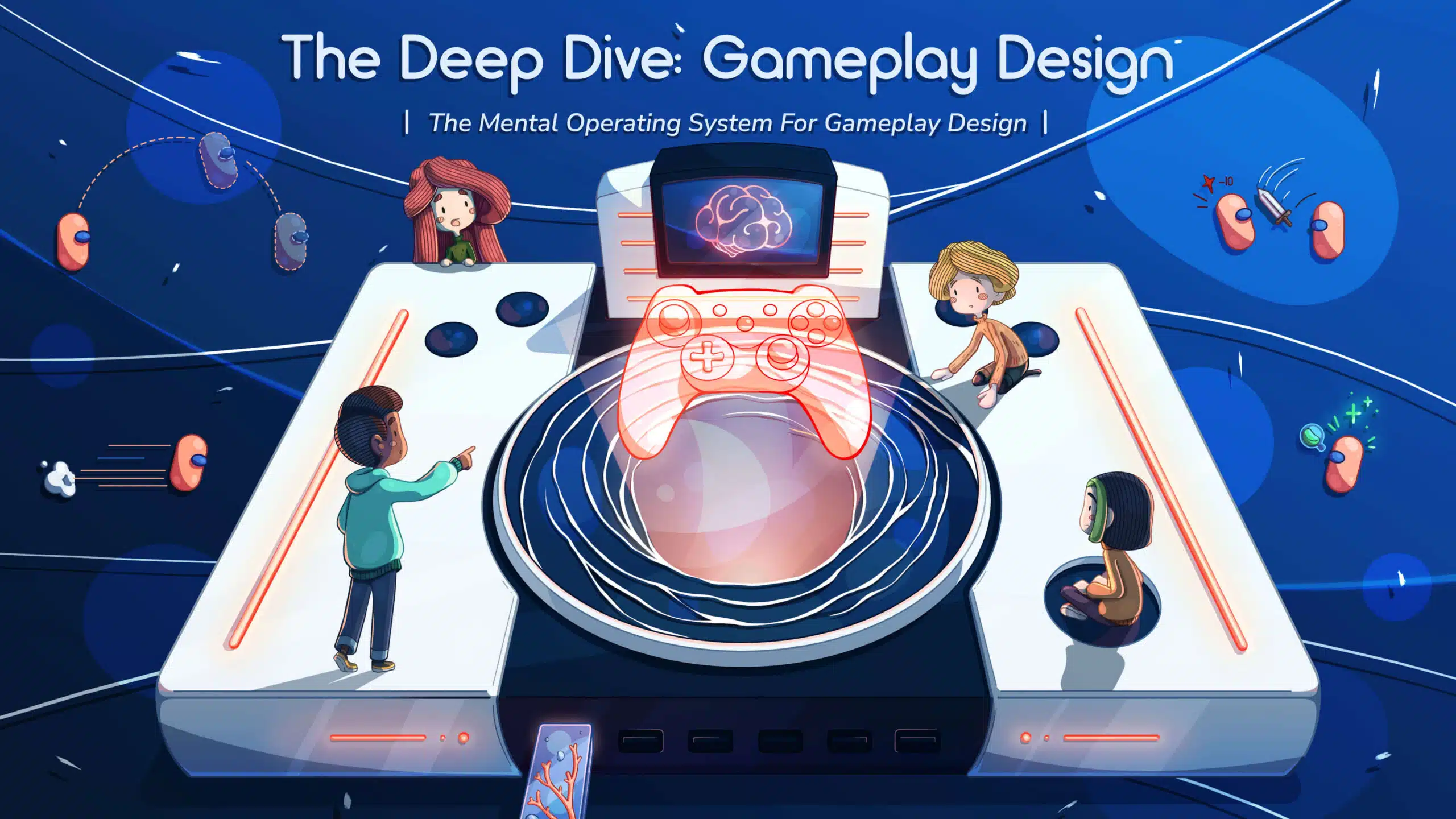
Introducing The Deep Dive: Gameplay Design.
| The Mental Operating System for Gameplay Design |

Here is everything inside The Deep Dive: Gameplay Design.
The Deep Dive isn’t a collection of tips. It isn’t a lecture series you watch and forget.
It’s a complete system — designed to install a new way of thinking about gameplay design into your workflow, step by step.
Here is exactly what you’re getting.
The Deep Gameplay Canvas + Core Training (Value: $247)


The operational cockpit of your design process. Plus the full training that installs the method behind it in your mind.
This is the foundation of everything.
At the center of the system sits The Deep Gameplay Canvas — a hands-on Miro board where the entire method comes to life on your own projects.
This isn’t a worksheet you fill out once and forget.
It’s the place where your ideas stop being abstract and become structures you can see, evaluate, and iterate on.
Every section of the Canvas guides you through a specific stage of the thinking work — from defining the experience you want to architect, to mapping the systems that produce it, to tracing the cause-and-effect relationships that determine what actually happens in the player’s mind.
You’ll use it on every project from here on.
Not because you have to — because once you’ve worked with it, designing without it feels like flying blind.
And to teach you how to think with the Canvas, you get the full Deep Gameplay Design: Core Training — 10 focused video lessons that take you from the broken approach you’ve been using to a structured, intentional method for gameplay design.
Not generic game design theory.
Not implementation tutorials.
The specific thinking process for designing gameplay — from the first spark of an idea to a complete, designable structure.
Here is what you’ll walk away with:
- A fundamentally new way of seeing games — not as collections of features, but as invisible architectures of cause and effect. The shift that makes everything else click.
- A clear method for defining your Game Direction — the precise experience you want your player to have, defined before you design a single system. The filter for every decision you'll ever make on the project.
- A process for turning any vague idea into a structured starting point — so instead of staring at a blank page wondering where to begin, you take the messy concept in your head and crystallize it into something concrete and workable.
- A step-by-step method for building a complete gameplay blueprint — from your initial concept to a fully mapped structure of systems, interactions, and cause-and-effect relationships. Each step builds on the last. Nothing left to guesswork.
- The ability to trace any design problem back to its structural root — so when something doesn't feel right in your prototype, you don't tweak blindly for weeks. One precise intervention instead of months of random adjustments.
Every lesson is focused, dense, and built to give you something usable — not to fill time.
You’ll complete the core system in a few dedicated sessions, and you’ll have a working blueprint for your own project by the time you’re done.
Two ways to design a game. Only one of them actually works.

The lists don’t connect to anything.
The Canvas makes the connections visible, testable, and designable.
That’s the shift. And it’s the difference between a pile of ingredients and an architecture.
But the Canvas and the Core Training alone aren’t the full package.
I built three additional tools to make sure you don’t just understand the method — you can actually use it with confidence from day one.
Bonus #1
Thinking Through The Depths (Value: $67)
Inside The Mind of a Deep Gameplay Designer: How To Turn Raw Ideas Into Deeply Intentional Gameplay
Here’s a problem I’ve seen over and over: someone finishes the training, understands the concepts, opens the Canvas on their own project — and freezes.
Not because the method is unclear.
But because knowing a framework and knowing how to think with it are two very different things.
Thinking Through The Depths closes that gap.
It’s a complete real-time walkthrough where I apply the Canvas to a game concept from scratch — with every decision, every wrong turn, and every reasoning chain fully visible.
You won’t just see the finished result. You’ll see the messy, honest thinking process that produces it.
After this, you won’t stare at a blank Canvas wondering where to start.
You’ll have a concrete model of how the method actually works in practice — and you’ll recognize when your own reasoning is on track and when it’s drifting.
Bonus #2
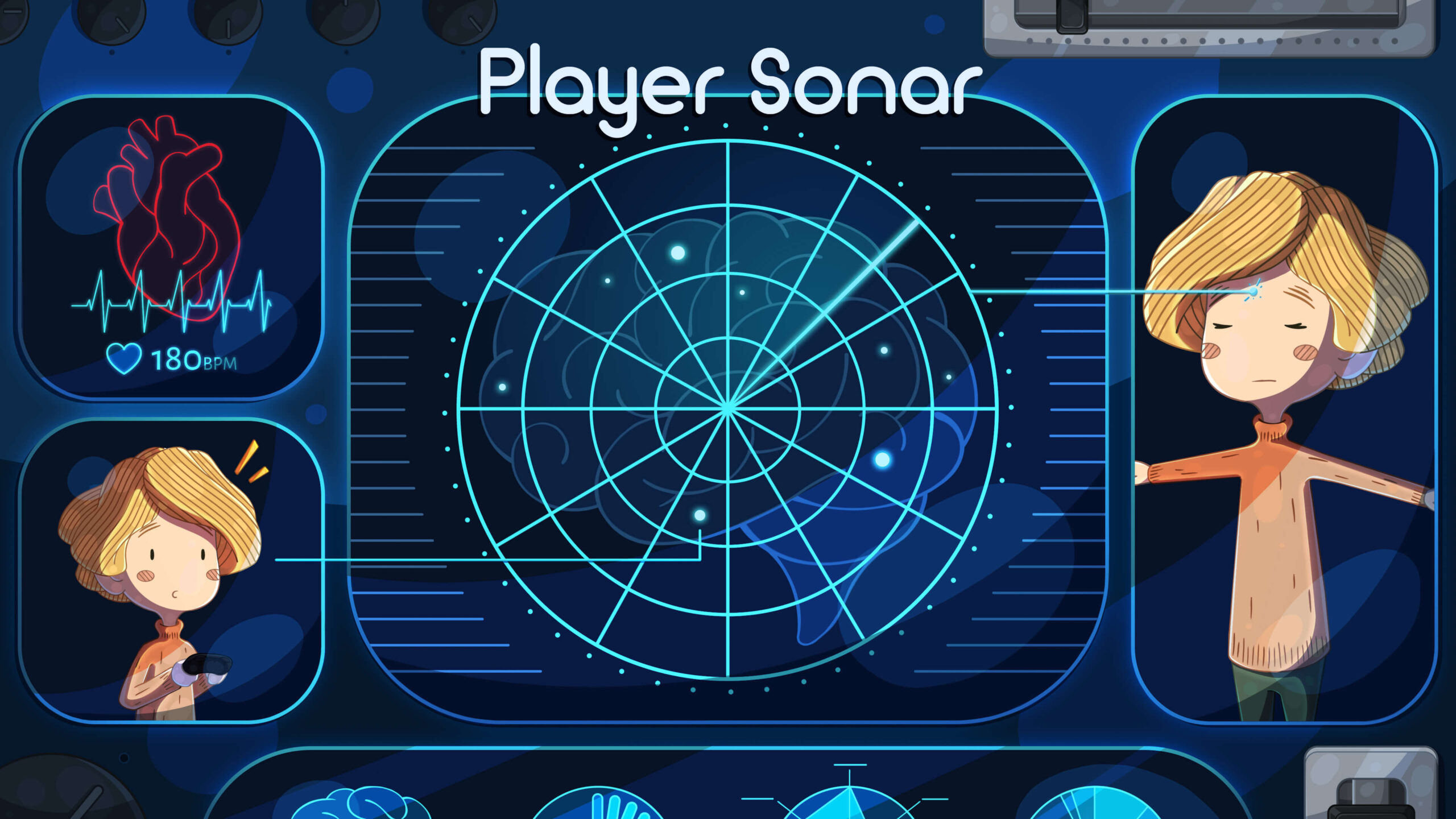
Player Sonar (Value: $47)
How to Decipher What Players Think During Playtesting Without Listening to What They Say
You’ve designed your structure. You’ve built a prototype. Now the question:
does it actually produce the experience you designed for?
The standard answer is to ask your playtesters what they think.
That answer is wrong — and it’s costing you clarity you can’t afford to lose.
What players tell you is a story their conscious mind builds after the fact. The real data is in what they do: their actions, their hesitations, their reactions.
Player Sonar teaches you to read that behavior and connect it back to your design structure — so you can diagnose the real problem instead of chasing symptoms.
Playtesting stops being a source of confusion and becomes the most precise tool in your toolkit.
Here's everything you're getting today:
- The Deep Gameplay Canvas + Core Training
$247
- Thinking Through The Depths — Video Walkthrough
$67
- Player Sonar — Video Course
$47
Total Value: $361
So what does all of this cost?
You’ve seen the full system.
The core course and the Canvas.
The walkthrough that shows you how to think with the method.
The playtesting framework that turns confusion into diagnosis.
Total value: $361.
Your investment today: $67.
Not a monthly subscription. Not a payment plan. A single payment — and it’s yours permanently.
I’m going to tell you why, because you’re probably wondering.
I could price the core system alone at $247 and it would be worth every dollar. I know that because I spent five years building what’s inside it — and because nothing else like it exists anywhere in the market.
But The Deep Dive isn’t designed to be exclusive. It’s designed to be foundational.
My goal is to put this mental operating system into the hands of every serious aspiring gameplay designer who’s ready to stop guessing and start designing. Not just those with the deepest pockets. Everyone who’s willing to do the work.
$67 is the price that makes that possible.
It’s low enough to be accessible. It’s high enough that you’ll actually commit to going through it — because free things collect dust, and I didn’t build this to collect dust on your hard drive.
And I’ll be honest about something else: I know what happens when a designer installs this system and starts working with it.
The way you see games changes. The way you approach your own projects changes. And when you’re ready to go deeper — much deeper — into the full method, that path exists too. I’ll be here.
But that’s your future decision.
Today, the only question is whether $67 is worth it for the foundational system that changes how you think about gameplay design.
Let me put that in perspective.
A game design degree costs $30,000 to $100,000 depending on where you live.
It takes three to four years.
It teaches you a bit of everything — narrative, level design, UI, production, programming — and at the end of it, you still don’t have a structured method for gameplay design. You have a generalist education, a mountain of debt, and the same missing piece you walked in with.
A single online course from an industry veteran costs $200 to $500.
It gives you principles and insights from someone with real experience — but as we discussed, principles without a transferable method leave you dependent on intuition you haven’t built yet.
The Deep Dive costs $67.
It gives you the one thing neither of those alternatives provide: a structured, operational method for gameplay design that you can use on your very next project. Focused entirely on the discipline that matters most to you.
No filler. No generalist padding. No intuition required.
$67 is less than a new game and its season pass. Less than a single textbook from a university course. Less than a dinner out.
For the system that changes how you think about the work you care about most.
The math isn’t complicated. And neither is the next step.
And if you’re still not sure — if there’s still a voice in your head wondering “but what if it doesn’t work for me?” — then this next part is specifically for you.
The Harbour Haven Guarantee.

I want to make this simple.
Go through The Deep Dive. Watch the lessons. Open the Canvas. Apply the method to your own project. Take the full 30 days.
If at any point you feel it hasn’t delivered on its promise — if the system doesn’t change how you think about gameplay design — send me one email and you’ll receive a full refund.
No questions. No hoops. No awkward conversation.
And the Canvas stays yours. Once it’s duplicated into your Miro account, it’s yours to keep — refund or not.
I’m not going to ask you to give back a tool you’ve already started working with.
I can make this promise because I’ve seen what happens when a serious designer commits to this system. The shift is real, and it’s not subtle.
But I’d rather you experience that yourself than take my word for it. So the risk is entirely on me.
You either get the transformation I described on this page, or you get every cent back.
There is no scenario where you lose.
That said — this system isn’t for everyone. And I’d rather be upfront about that now than have you find out after you’re inside.
This is for you if:
- You're serious about gameplay design — not just curious. You don't want another video to watch passively. You want a method you can sit down and use on your own project, starting this week.
- You're tired of guessing and ready for a process. You've had enough of trial-and-error, enough of feature lists that go nowhere, enough of "find the fun" as a design strategy. You want clarity and control over your creative process.
- You're willing to do the thinking work. This system is pre-code by design. The most important work happens before you open any engine — on paper, on the Canvas, in your head. If that excites you instead of intimidating you, you're in the right place.
- You want to understand the why, not just the what. You're not looking for recipes to copy or templates to fill in. You want to understand how gameplay actually works at a structural level — so you can make your own decisions with confidence, on any project, in any genre.
- You're done accepting guesswork as the price of admission to this discipline — whether you're just starting out, years into your journey, or a working professional who's realized that intuition alone has a ceiling. The method meets you where you are.
This is NOT for you if:
- You're looking for general game design training. The Deep Dive is laser-focused on gameplay design — the structural architecture of interactive systems. It does not cover level design, narrative design, game balancing, UI/UX, or prototyping. These are separate disciplines. If you're looking for a broad overview of game design as a whole, this isn't the right fit.
- You're looking for engine tutorials or programming instruction. The Deep Dive is about the design thinking that happens before implementation. If you need to learn Unity or Unreal, this isn't it.
- You want ready-made formulas you can apply without thinking. This system teaches you how to think, not what to think. If you want someone to hand you a recipe and guarantee the result, you'll be frustrated here.
- You're not willing to invest real mental effort. The method works — but it requires you to engage with it actively. If you're looking for something you can absorb passively while doing something else, this isn't built for you.
- You expect a $67 product to magically launch your career overnight. This is a foundational system. It will fundamentally change how you approach gameplay design. It will not get you hired at Riot next month. If that's your expectation, neither this nor anything else at any price will meet it honestly.
Still have questions? Here are the most common ones.
FAQ
"How do I access everything after I buy?"
Instantly. After your purchase, all the material — the full course and every bonus — is loaded into your personal Command Deck (your private area on the WhaleBrain platform).
If you don’t have an account yet, one is created automatically. You’ll receive a passwordless access link via email within minutes.
No complicated setup. Click, log in, start.
"Is the access permanent?"
Yes. Once you’re in, you’re in. The course, the bonuses, the Canvas — everything stays in your Command Deck permanently.
Go at your own pace. Come back whenever you need to. It’s yours.
"What do I need to go through the material?"
A browser and an internet connection. That’s it for the video lessons.
For the Deep Gameplay Canvas, you’ll need a free Miro account — and duplicating the board to your own workspace takes a single click directly from the Command Deck.
"What payment methods do you accept?"
We process payments through Stripe, which supports most major options depending on your country — credit and debit cards, PayPal, Klarna, and others. You’ll see all available methods at checkout.
"Do I need any prior experience or technical skills?"
No programming skills. No engine experience. No formal training. The Deep Dive is about design thinking, not implementation.
If you can watch a video and follow a structured reasoning process, you have everything you need.
The system is built to be accessible whether you’re just starting out or you’ve been in the trenches for years.
"Is this about gameplay design only, or game design in general?"
Gameplay design only. The Deep Dive does not cover level design, narrative design, game balancing, UI/UX, or programming.
It is 100% focused on the structural architecture of interactive gameplay — the foundational discipline that everything else builds on.
How is this different from MDA, the Art of Game Design, or other frameworks I've already studied?
Those resources are built for a different job. MDA is an analytical lens — its own creators designed it to analyze games, not to design them. It gives you a vocabulary to talk about what a game does, not a process to build one from scratch.
Books like The Art of Game Design are collections of insights, lenses, and principles — valuable as reference, but they don’t contain a step-by-step method for transforming a raw idea into an intentional, functional gameplay structure. Because that method doesn’t exist in the current game design literature.
Deep Gameplay Design fills that exact gap. It’s not another analytical lens. It’s not a collection of tips. It’s the operational process — from first idea to complete blueprint — that the existing resources have never been built to provide.
If you’ve studied MDA or similar frameworks, you already have part of the language. What you’re missing is the method that turns that language into actual design work. That’s what this is.
"What if it's not for me? Can I get a refund?"
Absolutely. The Harbour Haven Guarantee gives you a full 30 days.
If at any point you feel the system hasn’t delivered on its promise, send one email to help@whalebraindesign.com and you’ll receive a complete refund. No questions, no conditions.
You’ve read this far. And I don’t think that’s an accident.
Something on this page resonated — maybe when you recognized your own frustration in those half-finished prototypes and that slow erosion of confidence.
Maybe in the moment where the philosophy clicked and you thought “that’s what’s been missing.”
Whatever it was, you’re still here. And that means something.
So let me put the choice in front of you clearly, because you deserve clarity — not pressure.
Two paths. One decision.
Path one: you close this page.
Nothing changes. Tomorrow morning, you open your project file and face the same fog. The same disconnected systems. The same gut feeling that something is fundamentally wrong — without any way to name it, diagnose it, or fix it.
You go back to the tutorials. Back to the feature lists. Back to pulling the slot machine lever and hoping that this time, something clicks.
Weeks pass. Months. The prototype sits unfinished.
The next idea feels exciting for a while — until it doesn’t.
The cycle continues. And that quiet voice in the back of your mind gets a little louder every time.
Path two: you decide this is the day it stops.
You install a mental operating system that changes how you see games, how you approach your own projects, and how you make every design decision from this point forward.
You open your project file tomorrow — and instead of fog, there’s a Canvas. A structure. A clear direction. A process that tells you exactly where to start, what to build, and why every piece is there.
The guessing is over. The slot machine is unplugged. You’re not hoping anymore. You’re designing.
Here’s everything that’s waiting for you on the other side of that click:
- The Deep Gameplay Canvas + Core Training — $247 value
- Thinking Through The Depths — Video Walkthrough — $67 value
- Player Sonar — Video Course — $47 value
Total value: $361
Your investment: $67
Backed by the Harbour Haven Guarantee — 30 days, full refund, no questions asked.
You either get the transformation or you get your money back. There is no scenario where you lose.
Click the button below and you’ll land in your Command Deck within minutes — your account set up, every lesson and bonus loaded, ready to go.
↓↓↓
Secure checkout. 30-day money-back guarantee. Instant access.
P.S. — I built this because I needed it and it didn’t exist. Every lesson, every framework, and the Canvas at the center of it all come from real struggle and real breakthroughs — five years of obsessive work to turn gameplay design from a guessing game into a real, structured discipline.
If you’re serious about this, I promise you: what’s inside will change how you think about game design permanently. And at $67 with a full 30-day guarantee, there’s genuinely nothing to lose.
Copyright © 2025 – 2026 All rights Reserved.  WhaleBrain S.r.l. (Single Member Company) | Registered Office: Via Marco D’Agrate 15, 20139 Milan, Italy | VAT ID: IT14353270961 | Milan Bus. Reg. n. MI-2776700 | Share Capital: € 10.000,00 fully paid-up